Visit the Museum

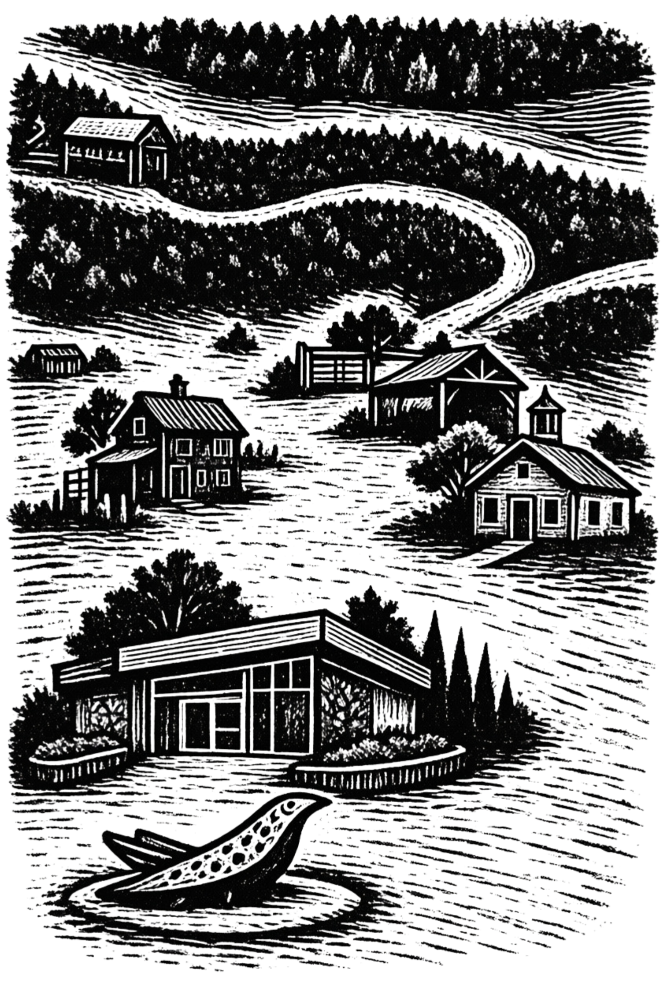
Lincoln Museum & Cultural Centre grounds map
...
Plan Your Visit

Our Location

The Museum is located in the village of Jordan, Ontario. A short walk down Main Street brings you to the shops and amenities of Jordan Village, including the Jordan Art Gallery, Inn on the Twenty, and the Heritage Gift Shop.

The site encompasses 1.3 acres, bordered by the Niagara Escarpment, and connects directly to the Twenty Valley Trail, which leads to nearby Sho’aríshon Park. It is also home to several historic buildings and commemorative sites, including the Fry House, the Schoolhouse, and Haines Cemetery.


3800 Main Street, Jordan Station, Ontario

Directions
Hours of Operation
  • Monday: closed
  • Tuesday – Sunday: 10 a.m. – 5 p.m.
Parking

A small parking lot is located at the back of the building. Additional street parking and a municipal lot are available nearby.

Admission

Admission is by donation (suggested $5). All donations are greatly appreciated.

Accessibility

The Museum aims to accommodate visitors of all abilities. Accessible parking, entry to the main building, access to historic buildings, and supportive tools such as noise-cancelling headphones and French translations are available.

If you have specific accessibility needs, please contact us in advance — we would be happy to assist.

The Museum Grounds

Facilities & Site

There are lots of things to see at the Lincoln Museum and Cultural Centre!

In addition to our purpose-built museum building, the site includes two historic buildings, an early settler cemetery, and a connection to Sho’aríshon Park via the Twenty Valley Trail.

From June to August, explore the historic buildings with costumed interpreters during museum opening hours, or book a private tour for a more personalized experience.

The Museum Grounds

01The Museum

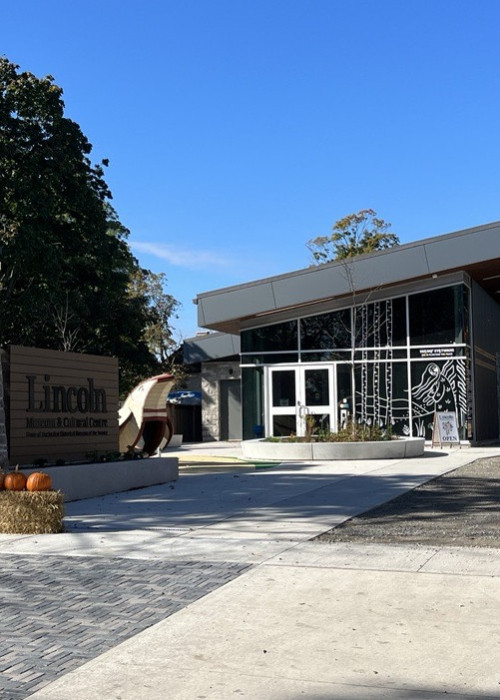
The Lincoln Museum and Cultural Centre: Home of the Jordan Historical Museum of the Twenty opened its new purpose-built facility in 2020. The building includes multiple gallery spaces for rotating and permanent exhibits, and a multi-purpose room for public programs and events. 

The site spans 1.3 acres in the heart of Jordan Village, bordered by the Niagara Escarpment and directly connected to the Twenty Valley Trail.  Outdoor site features include a children’s play structure inspired by a traditional Fraktur bird motif, a Pensylvanian German Art Form, a native species and pollinator garden, and a children’s outdoor classroom space that supports nature-based learning and seasonal programming.

Fry House
Fry House

The Museum Grounds

02The Fry House

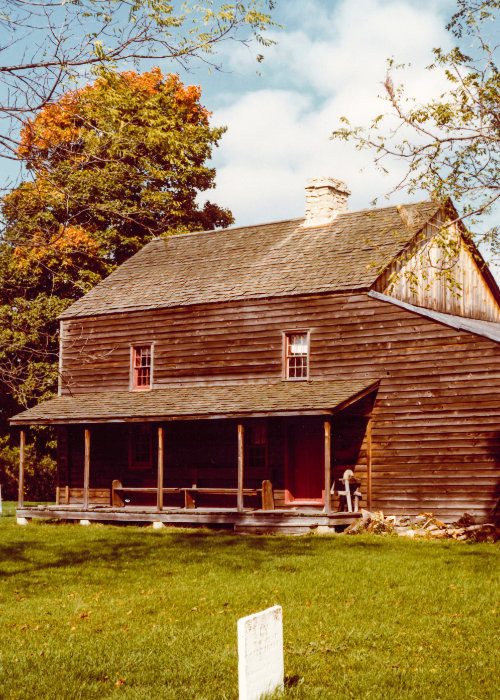
The Fry Family House is a two-story log dwelling built around 1815 by Jacob Fry and Elizabeth Wismer, early German-speaking Mennonite settlers from Bucks County, Pennsylvania. Originally located near Fly Road and Victoria Avenue in Vineland, the house is a rare surviving example of Pennsylvania German Traditional architecture in Canada. 

Jacob and Elizabeth raised 12 children in the home, including Samuel Fry, a well-known local weaver. The family lived in the home until 1892. In later years, the house was used as a playhouse and chicken coop.

In 1959, to prevent demolition, local volunteers carefully moved the house to the museum site. Inside the house, period-appropriate artifacts and furnishings are displayed, including items attributed to the Fry family. Explore the Fry House with a costumed interpreter from June to August each year, or book a private tour.

1859 Schoolhouse
1859 Schoolhouse

The Museum Grounds

03The Schoolhouse

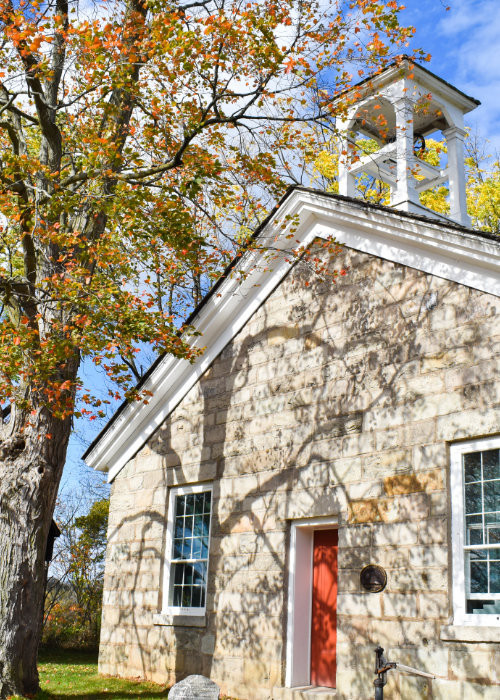
The Jordan Schoolhouse, also known as School Section #4 (S.S. #4), is a one-room school that served the children of Jordan for almost 90 years. 

Inside, students learned the three Rs (reading, ‘riting, and ‘rithmetic), moral instruction, and hands-on skills. As many as 60 children aged 6-16 were taught by a single schoolmaster/mistress, who maintained a strict, military-style routine to keep order and efficiency.

The school closed in 1948. In 1953, Jordan Wines purchased the building and returned it to the community. Volunteers filled the space with agricultural tools and artifacts and opened it as Jordan’s first museum. The schoolhouse was later restored to reflect a typical 1908 classroom.  Explore the Schoolhouse with a costumed interpreter from June to August each year, or book a private tour.

Children playing on museum grounds

The Museum Grounds

04Haines Cemetery

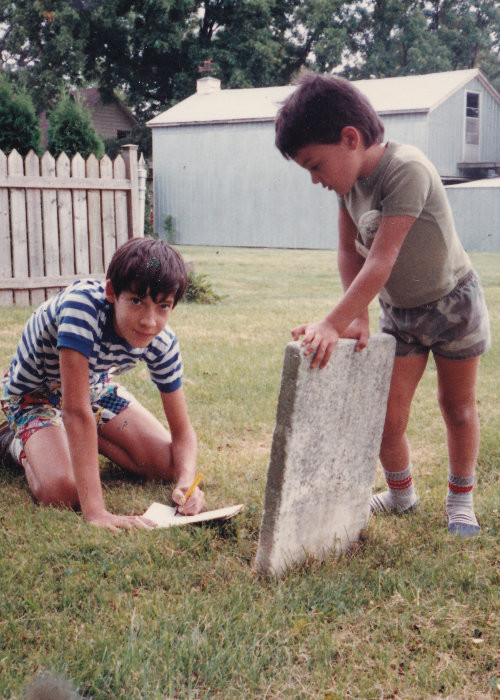
The Haines Cemetery is the graveyard on the site that holds the remains of Loyalist settlers and their families who came to Jordan between 1880 and 1900. On the east side of the Fry House, there is a Mennonite Cemetery that holds the remains of early Pennsylvania German Mennonite settlers of the Jordan district, with burials dating as early as the 1840s.

Sho'arishon Park
Sho'arishon Park

05Sho’aríshon Park

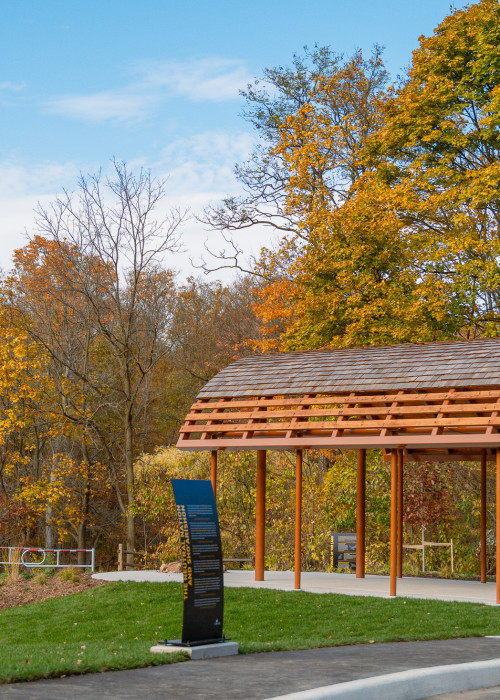
Created in close collaboration with Indigenous partners, the park honours the history of the Neutral Nation (Attawandaron), the first known inhabitants of the land now called Lincoln.

The park includes a rain garden with native species, an interpretive longhouse structure, shaded gathering spaces, storytelling signage, and a mix of permanent and evolving public art. Architectural and interpretive elements are rooted in Indigenous design.

Sho’aríshon Park is connected to the Lincoln Museum & Cultural Centre by road and by the Twenty Valley Trail.

Plan Your Visit

Twenty Valley Trail and Ellis Property

06Ellis Property

The Ellis Property is a 23-hectare (58-acre) protected landscape located just west of the Lincoln Museum and Cultural Centre and north of Ball's Falls Conservation Area.

Traversed by Twenty Mile Creek, the property features escarpment cliffs, ponds, and Carolinian forest, supporting a diverse range of plant and animal species. The land also contains several archaeological sites, reflecting its long history of human presence. Today, the Twenty Valley Trail passes through the Ellis Property, offering a walking route that connects Sho’aríshon Park with the surrounding landscape.

The property was generously donated to the Ontario Heritage Trust by Art Ellis in 1984 and is managed as a protected natural area.

Ontario Heritage Trust